
Who this is for
This page is for banks, credit unions, lenders, mortgage businesses, investment and wealth firms, insurance offices and fintech companies retiring their own business IT. A single office and a branch network can start with the same practical question: what equipment may be released, under whose approval, and with what instructions?
Build a location-specific release list
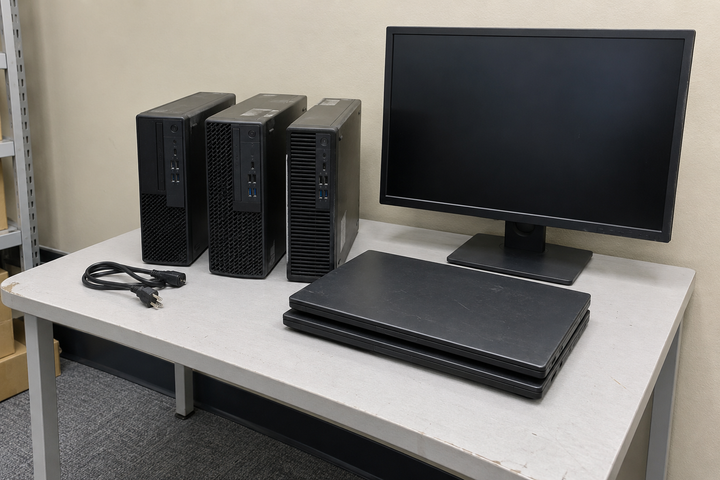
Begin with equipment types, approximate counts, available models and the collection ZIP. Identify which assets belong to each branch or office. Separate purchased equipment from leased or third-party assets, and flag anything that will remain in internal use. A preliminary list can begin an inquiry; agree the final identification and reconciliation scope before collection.
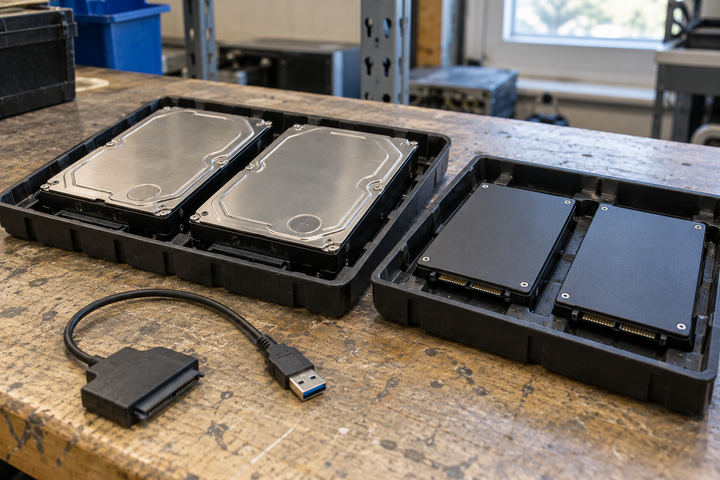
Identify data-bearing devices explicitly. Include installed drives, loose drives, storage arrays and networking equipment where configurations may be stored. Your IT or security contact should approve the data requirements and any exceptions. Keep passwords, customer information and business data out of the initial assessment request.
Agree the collection and reporting scope
- Approve release. Name the contact authorized to release equipment and approve changes at each site.
- Define the data outcome. Explain the applicable policy, media types, known failures and evidence your team needs.
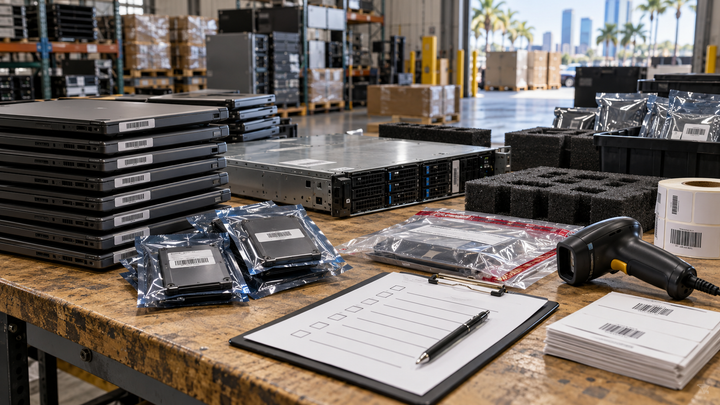
- Plan the handoff. Confirm access, packing responsibilities, collection timing and the agreed asset identifiers or grouped counts.
- Reconcile intake. Keep additions, missing items and differences visible until they are resolved.
- Review closeout. Match the received inventory, agreed processing records, exceptions and financial outcome to the project scope.
A pickup receipt records a handoff. It should not be treated as a substitute for the processing or disposition records your organization has requested. TBR's sample project documentation explains record relationships using clearly labeled examples.
Evaluate recovery after requirements are clear
Some retired hardware may be suitable for reuse or resale. Model, configuration, condition, release restrictions, market demand and processing costs affect that assessment. Ask whether a proposal is an equipment purchase or a remarketing arrangement, what costs apply, and how the final outcome will be explained. Review TBR's recovery and buyback service before comparing headline estimates.
Questions to settle before collection
Can several locations be handled as one project?
Share the locations and timing first. Agree the collection arrangements and how each site's inventory and records will remain distinguishable.
Do we need to approve a specific data method?
Your authorized team should define the required outcome and review the proposed scope, provider responsibilities and exception path. A service description alone does not replace that approval.
Source note
NIST SP 800-88 Revision 2 informs media-sanitization planning. Project-specific security, records and release requirements remain subject to your organization's approval.
How TBR Trade Group can help
TBR can discuss data-handling requirements, collection planning and equipment recovery for financial-services IT in Tampa Bay and surrounding Florida. Send equipment types, approximate counts, collection locations, timing and required records. There is no minimum quantity to start an inquiry. Request an ITAD assessment; the team will confirm the project scope, processing responsibilities and commercial terms before scheduling.