
Start with ownership and release authority
This page is for public and private schools, districts, colleges, universities, technical and training institutions, and research organizations retiring business IT. Before arranging collection, confirm who owns the equipment and who may approve its release. Leased devices, third-party assets and equipment subject to restrictions need a clear decision before they enter an ITAD lot.
Use your organization's established surplus and approval procedures. Do not assume that another district or college follows the same rules. Identify the internal contact who can authorize changes to quantities, processing scope or the collection list.
Build an inventory that explains the equipment
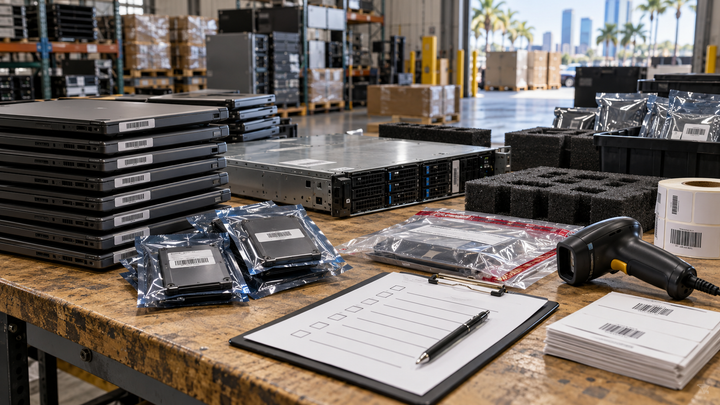
An initial inquiry can start with equipment types, approximate counts, campus locations and timing. Add models, configurations, condition and available identifiers as the project is defined. Separate laptops, desktops, workstations, servers, networking, monitors, loose drives and accessories. Flag damaged batteries or other handling concerns for discussion before collection.
For a multi-campus refresh, keep lists separate by campus or department. Confirm access, loading arrangements, packing responsibilities and the collection windows that fit your organization. Timing and transport are confirmed against the agreed scope rather than assumed from an academic calendar.
Resolve account restrictions through your own administrators
Managed equipment may remain associated with an organization's enrollment or account-management systems. Ask the responsible administrator which release or deregistration steps apply and when they should be completed. Ownership approval, account release and media sanitization are separate decisions; completing one does not establish that the others are finished.
Microsoft's Windows Autopilot registration guidance describes registration and deregistration considerations. Follow the current platform guidance for the actual devices in your project. Do not include student information, passwords or account credentials in the initial assessment request.
Agree the data, handoff and closing records
- Define the data scope. Identify installed or loose media, known failures and the required outcomes.
- Approve the release list. Record the campus, quantities, identifiers and authorized contact at the agreed level.
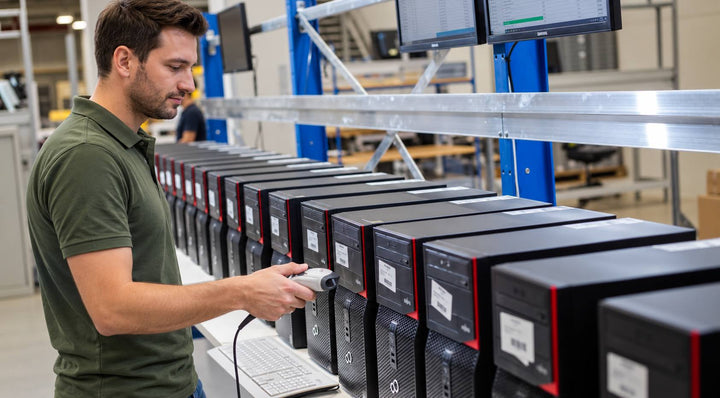
- Document collection. Keep additions and other changes connected to the handoff record.
- Reconcile intake. Resolve discrepancies before the project is closed.
- Review the final pack. Match the received equipment, processing results, exceptions and financial outcome to the agreed requirements.
Review TBR's sample documentation when deciding what your organization needs. The samples use illustrative data.
Consider recovery and recycling in the same plan
Suitable hardware can be assessed for reuse or recovery once restrictions and data requirements are understood. Exact models, condition, configuration, demand and project costs affect the assessment. Equipment without a suitable reuse route can be discussed under the agreed downstream recycling scope. A mixed lot should not be given one assumed outcome.
Common questions
Can a small school start with a rough list?
Yes. There is no minimum quantity to begin an inquiry. The list and identification requirements can be refined as the scope is agreed.
Should we erase accounts before asking about recovery?
Ask your administrator to plan the correct sequence. Describe any restrictions in the inquiry so their effect on release and recovery can be discussed.
How TBR Trade Group can help
Send equipment types and available models, approximate counts, campus ZIPs, timing, account restrictions and required records. TBR can discuss collection planning, equipment recovery and data responsibilities for education IT in Tampa Bay and surrounding Florida. Request an ITAD assessment to confirm the scope and project terms.