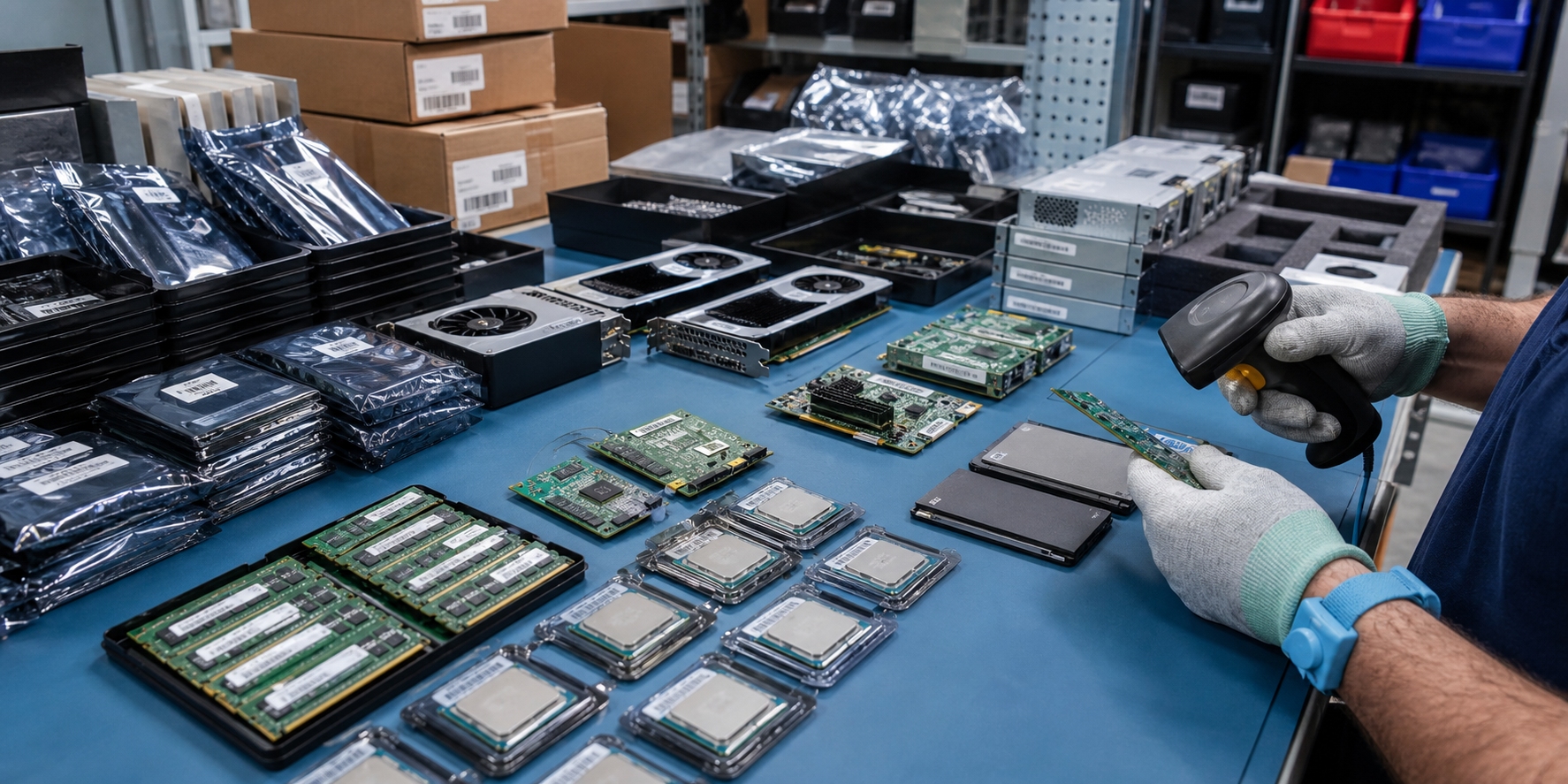
A bulk component order is not just a bigger version of a single-part purchase. Once a request includes CPUs, memory, SSDs, add-in cards, GPUs, power supplies, cables, rails, adapters, or mixed business electronics, the buyer and supplier need a shared definition of what counts as acceptable inventory.
TBR Trade Group supports bulk computer parts sourcing for buyers that need tested components, resale inventory, repair stock, upgrade parts, and project-based hardware. The cleanest orders start with a practical checklist: what the parts must fit, how they should be tested, what condition is acceptable, how data-bearing devices should be handled, and how the shipment should arrive.
Start With the Business Use Case
A reseller building stock, an IT team repairing a fleet, and a lab staging spare server components may ask for similar parts but need different quote terms. A reseller may accept mixed grades if the lot is priced correctly. A production repair team may need exact part numbers and a tighter DOA window. A lab may care more about platform coverage than cosmetics.
Before requesting pricing, write one sentence that explains the goal of the order. That sentence helps the supplier decide whether to quote exact-match items, compatible alternates, sorted lots, tested pulls, refurbished components, or lower-cost inventory with more buyer-side sorting.
- For repair stock, list the target systems and the failure types you are trying to cover.
- For resale inventory, define acceptable cosmetic grades and labeling requirements.
- For upgrade projects, include the installed platform, firmware constraints, and rollout deadline.
- For liquidation recovery, separate reusable components from scrap or recycling streams.
Build a Quote-Ready Parts List
Loose requests such as "send pricing for used computer parts" slow the process because the supplier has to guess the real need. A stronger request lists product category, manufacturer part number when available, target platform, capacity or speed, acceptable substitutions, quantity range, condition requirement, and destination. Even if some details are unknown, stating the unknowns prevents accidental assumptions.
Use TBR's used enterprise hardware page as a frame for broad server, workstation, storage, and component requests. For larger orders, it also helps to split the quote into must-have parts, preferred alternates, and opportunistic add-ons that are only worth buying at the right price.
- Use exact part numbers for compatibility-sensitive components such as server memory, PSUs, RAID cards, HBAs, and OEM-specific carriers.
- Use performance ranges for flexible categories such as general office desktops, common SSD capacities, or standard network cards.
- Flag exclusions clearly, such as missing labels, cracked plastics, heavy dust, mixed voltage, untested storage, or incomplete kits.
- Tell the supplier whether partial fills are useful or whether the order only works as a complete batch.
Make Condition Grading Specific
Condition language should reduce surprises, not create new ones. "Used" can mean clean tested pulls, cosmetic wear, missing accessories, no retail packaging, mixed-lot inventory, or fully refurbished parts with additional screening. A good order defines what is acceptable for labels, housings, connectors, fans, brackets, drive carriers, heatsinks, and anti-static packaging.
TBR's hardware condition guide is useful when a buyer needs to separate cosmetic appearance from functional expectations. A scuffed bracket may be acceptable for internal deployment, while a damaged connector, bent CPU contact area, worn latch, unreadable label, or cracked carrier can create real receiving problems.
Match Testing Scope to Order Risk
"Tested" should have a scope. For some bulk lots, count verification and visual inspection may be enough. For higher-value orders, buyers may need compatible-platform recognition, memory diagnostics, storage health checks, GPU stress testing, port checks, fan inspection, or sample testing from a larger batch.
The key is to match testing to the cost of a miss. A low-cost mixed lot for experienced resellers can tolerate more buyer-side sorting. A time-sensitive repair order cannot. TBR's warranty, testing, and returns page can help frame what is covered, how DOA issues are handled, and what documentation is needed before shipment.
- Ask what test was performed, not just whether the part was "tested."
- Clarify whether accessories, cables, trays, brackets, and heatsinks are included in the test or only in the shipment.
- For mixed lots, define whether failed or cosmetically rough items are excluded, discounted, or intentionally included.
- Keep return windows and receiving inspection deadlines realistic for the size of the order.
Treat Storage Devices as a Separate Category
Storage should not be buried inside a general component lot without a plan. Hard drives, SSDs, NVMe drives, removable media, and systems with installed drives can carry data risk, health variance, interface questions, endurance history, and different testing needs. If drives are included, the quote should say whether they are wiped, tested, excluded, sold without data claims, or handled through a specific sanitization process.
NIST SP 800-88 Rev. 2, published in September 2025, defines media sanitization as a process that makes access to target data infeasible for a given level of effort and helps organizations set up sanitization programs based on information sensitivity. For buyers, the practical point is simple: data-bearing electronics need explicit handling rules before they leave a seller, refurbisher, recycler, or IT asset recovery workflow.
If your order includes retired company hardware, coordinate the purchasing side with your disposal or recovery plan. TBR's IT asset recovery page is relevant when reusable components, resale value, and data-bearing devices need to be handled together.
Packaging Is Part of the Product
Bulk electronics orders often fail at the packing stage. Heavy power supplies can crush boards. Loose heatsinks can damage memory. Bare cards can scrape contacts. Drives can shift inside cartons. A buyer who specifies packaging expectations early is less likely to spend the first day after delivery sorting avoidable damage.
The EOS/ESD Association publishes static-control standards and working groups for areas such as packaging, grounding, worksurfaces, gloves, process assessment, and ESD control programs. A buyer does not need to quote every standard in a purchase request, but it is reasonable to require practical ESD-safe handling, anti-static packaging where appropriate, part separation, cushioning, and clear carton labeling.
For more detail, TBR's ESD-safe computer component packaging guide covers anti-static protection, cushioning, documentation, and shipment readiness. Buyers shipping across borders should also review TBR's international computer parts shipping checklist and the main shipping page before finalizing order size and destination.
Balance Cost, Energy, and Reuse Goals
Buying used computer components can be a practical cost-control move, but it also connects to resource conservation. EPA guidance says electronics donation and recycling help conserve resources and natural materials, and it advises considering hardware or software upgrades before buying a brand-new product. That is exactly where tested used parts can help: a memory upgrade, SSD replacement, GPU swap, or spare server component can extend useful equipment life when the platform still fits the workload.
Energy still matters. ENERGY STAR states that certified computers are third-party certified and use about 30-40% less energy than standard models through efficient components and better idle power management. For buyers, that means a used-parts order should not only chase the lowest unit cost. Consider the age of the target platform, power draw, workload value, availability of efficient replacements, and whether a repair is delaying a necessary refresh or extending a still-useful asset.
Decide How Substitutions Will Work
Substitutions can save money when the business case is flexible, but they create friction when compatibility matters. A supplier may have an equivalent memory module, a compatible SSD, a near-match GPU, or a different bracket style available. Whether that helps depends on the target platform and the buyer's tolerance for testing after delivery.
Use three simple buckets: exact match required, compatible alternate allowed with approval, and flexible category purchase. That structure lets a supplier quote quickly without sending a shipment that forces your receiving team to become the compatibility filter.
Bulk Used Computer Parts Quote Checklist
Before approving a bulk used computer parts order, confirm these details:
- Business use case, target platforms, and required delivery timing are clear.
- Part numbers, categories, specifications, quantities, and acceptable alternates are listed.
- Condition requirements cover labels, connectors, brackets, fans, heatsinks, housings, trays, and accessories.
- Testing scope is written in plain language and matches the risk of the order.
- Storage devices have explicit data-sanitization, health-check, inclusion, or exclusion rules.
- Packaging covers ESD-safe handling, separation, cushioning, carton labeling, and heavy-part isolation.
- Shipping destination, customs needs, receiving contacts, and delivery constraints are confirmed.
- DOA, replacement, return, and inspection timelines are agreed before shipment.
If you are sourcing bulk used computer parts, tested enterprise components, workstation parts, GPUs, storage, memory, CPUs, networking hardware, or mixed electronics inventory, send the target part list, quantities, condition expectations, substitutions policy, destination, and deadline when you request a quote from TBR Trade Group.
FAQ
What makes a bulk computer parts order quote-ready?
A quote-ready order includes part categories, exact part numbers where needed, quantities, target systems, condition requirements, testing expectations, acceptable substitutions, destination, and receiving deadline.
Can I buy mixed used computer parts without exact part numbers?
Yes, if the category is flexible and you define what is acceptable. For compatibility-sensitive parts, exact part numbers or platform details are still the cleaner path.
Should drives be quoted separately from other components?
Usually yes. Drives can involve data handling, health status, interface, capacity, endurance, and sanitization requirements that do not apply to many other parts.
How should bulk components be packed?
Use ESD-safe protection where appropriate, keep fragile boards away from dense metal parts, protect connectors, separate loose accessories, cushion each layer, and label cartons so receiving teams can inspect quickly.
Source Notes
- NIST SP 800-88 Rev. 2, Guidelines for Media Sanitization: NIST's September 2025 final publication defines media sanitization and explains that organizations should choose techniques and controls based on information sensitivity.
- U.S. EPA, Electronics Donation and Recycling: EPA notes that electronics donation and recycling conserve resources and advises considering hardware or software upgrades before buying a brand-new product.
- EOS/ESD Association, Standards: The association publishes static-control standards and working groups, including packaging, grounding, worksurfaces, gloves, process assessment, and ESD control programs.
- ENERGY STAR, Computers: ENERGY STAR states that certified computers are third-party certified to be energy efficient and use about 30-40% less energy than standard models.