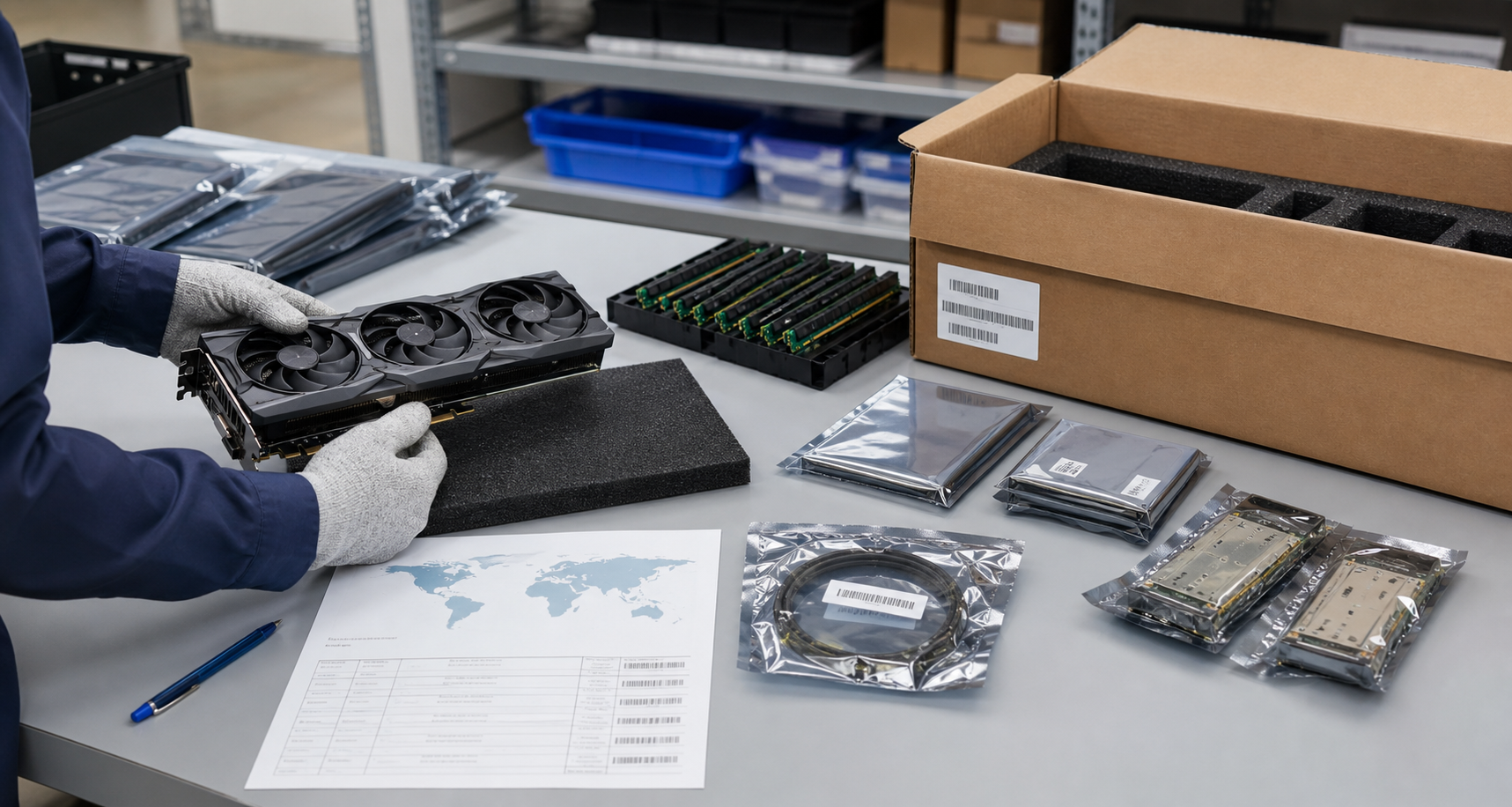
International electronics sourcing can be practical and cost-effective, but it is not the same as ordering a small domestic parcel. Tested GPUs, server memory, SSDs, replacement boards, and workstations may pass inspection at the supplier, then lose time at the border or at receiving if descriptions, values, carton labels, or battery details are unclear.
That is why serious buyers should treat logistics as part of procurement. The conversation should start before payment: what is being shipped, where it is going, how it is packed, what paperwork is needed, and who will handle import duties, taxes, and local delivery requirements. TBR Trade Group's shipping policy gives buyers a baseline for domestic and international handling, and larger projects should add order-specific details during quoting.
Start With the Destination and Receiving Plan
Many delays begin with incomplete destination details. A business address may have a loading dock, limited receiving hours, security check-in, a freight elevator, or a tax ID requirement. A campus, hospital, data center, or public-sector facility may need a purchase order number, attention line, department name, or delivery appointment printed on labels and paperwork.
Before a quote is finalized, share the delivery country, postal code, full consignee name, phone number, email, and any facility rules. For bulk orders, identify whether the shipment should move as parcel cartons, consolidated cartons, or palletized freight. Buyers sourcing bulk computer parts should also decide whether mixed SKUs can ship together or should be separated for faster receiving.
- Confirm the exact ship-to address and consignee before payment.
- Share delivery restrictions, dock hours, and internal routing notes early.
- Ask whether the shipment will be parcel, consolidated parcel, or freight.
- Match the quote to the real delivery path, not only the cheapest carrier option.
Use Clear Product Descriptions and Classification Details
Customs paperwork is not the place for vague descriptions. "Computer parts" may be understandable in a conversation, but a shipment benefits from item-level descriptions such as tested graphics cards, server memory modules, solid-state drives, power supplies, or replacement server components. The International Trade Administration notes that commercial invoices and packing lists are standard export documents, and that a commercial invoice is used by customs in determining duties while packing lists help customs officials check cargo against the invoice.
Classification also matters. The U.S. Census Bureau provides a Schedule B search tool to help exporters determine export commodity codes, while the U.S. International Trade Commission provides Harmonized Tariff Schedule information for imports into the United States. Buyers do not need to become customs brokers, but they should understand that product descriptions, quantities, values, country of origin, and classification details affect how shipments move.
If your order includes mixed components, ask for a packing list that breaks down the contents by model, quantity, condition, and carton. Tying that paperwork to TBR's hardware condition guide language can make receiving easier because the same condition terms used during quoting appear in the shipment record.
Separate Ordinary Electronics From Battery-Related Shipments
GPUs, DIMMs, CPUs, and many server components usually do not contain standalone batteries, but laptops, tablets, UPS units, controller cards, CMOS batteries, and tracking devices can change the shipment requirements. IATA explains that lithium batteries can be carried by air depending on configuration and watt-hour rating or lithium content, and it maintains updated battery guidance for shippers and freight forwarders.
Carriers also publish battery-specific acceptance and packaging rules. FedEx notes that battery shipments can create fire or corrosive risks if mishandled and that lithium battery shipments require proper identification, packaging, marking, labeling, and documentation. The practical takeaway for buyers is simple: identify batteries before the shipment is quoted, not after the cartons are packed.
- Tell the supplier if laptops, tablets, UPS systems, or battery-backed components are included.
- Ask whether any batteries are installed in equipment, packed with equipment, or shipped separately.
- Confirm that the selected carrier accepts the battery configuration for the destination.
- Do not assume a shipment can move by air if battery status is unclear.
Protect Tested Condition During a Longer Route
International shipping often involves more handoffs than a domestic ground shipment. Cartons may move through export processing, air or ocean transit, import clearance, local sorting, and final delivery. That makes physical packaging a procurement issue, especially for tested pre-owned electronics.
A good shipment starts with ESD protection, then uses component-specific cushioning and carton strength. For GPUs and PCIe cards, protect fans, shrouds, brackets, edge connectors, and auxiliary power sockets. For memory and SSDs, prevent flexing, rubbing, and loose contact inside the package. The same principles covered in our ESD-safe component packaging checklist matter even more when boxes cross borders.
Large orders should be packed for counting as well as protection. If a receiving team has to open every box and sort loose mixed parts before confirming the order, the shipment may technically arrive but still create avoidable labor, confusion, and claim risk.
Define Duties, Taxes, Insurance, and Claim Timing
International orders should be explicit about who pays import duties, taxes, customs fees, brokerage charges, and local delivery charges. Those costs are separate from the hardware price and can vary by destination, product type, value, and import rules. When a buyer needs a delivered-cost estimate, the supplier and carrier may need more detail than a simple part list.
Insurance and claim expectations should also be clear before shipping. High-value tested GPUs or server components deserve a plan for damage documentation: photograph outer cartons, preserve packaging, note shortages quickly, and contact the supplier before discarding materials. TBR's warranty, testing, and returns page is a useful reference for understanding how post-delivery issues should be handled.
Make Receiving Part of the Purchase Order
The receiving team is often not the same person who approved the purchase. Give them the order summary, packing list, expected carton count, tracking links, and any serial or asset identifiers before delivery. For multi-box shipments, ask whether each carton can show a box count such as "Box 2 of 5" and a brief contents label.
For enterprise buyers, receiving discipline protects both deployment schedules and supplier relationships. It helps confirm that the right products arrived, that the tested condition was preserved, and that any issue is reported while carrier claim windows are still practical.
- Compare carton count to tracking and delivery paperwork before signing.
- Photograph damaged cartons before opening them further.
- Check model numbers, quantities, and condition notes against the packing list.
- Escalate shortages, wrong models, or transit damage immediately.
- Keep packaging until the order is fully accepted.
International Shipping Checklist for Buyers
Before approving an overseas electronics order, use this checklist with your supplier:
- Destination country, full address, consignee, phone, email, and receiving hours are confirmed.
- Product descriptions are specific enough for commercial paperwork.
- Quantities, values, condition notes, and carton contents match the quote.
- Battery status is known for every item that may contain or ship with batteries.
- Packaging protects ESD-sensitive parts and keeps heavier items away from delicate components.
- Carrier, service level, tracking, insurance, and claim process are documented.
- Duties, taxes, brokerage, and local import responsibilities are understood by the buyer.
- The receiving team has the packing list and knows what to inspect on arrival.
If you are sourcing tested electronics for a business rollout, reseller order, repair program, or hardware refresh, include destination and logistics details when you request a quote from TBR Trade Group. The more precise the order is up front, the easier it is to protect the hardware through delivery.
FAQ
What documents should buyers expect for international computer parts shipping?
Most cross-border shipments need a commercial invoice and packing list, and some shipments may need additional export, import, origin, carrier, or regulatory documents. Requirements vary by country, product, and value, so confirm details before shipping.
Can used or refurbished computer components ship internationally?
Often yes, but destination rules, carrier acceptance, product classification, documentation, value, and condition descriptions all matter. Tested used electronics should be described accurately and packed to preserve their tested condition.
Should international buyers choose the fastest carrier service?
Not automatically. The best service is the one that balances delivery time, tracking, customs handling, packaging needs, value, insurance, and receiving requirements.
What is the biggest mistake buyers make with overseas electronics orders?
The biggest mistake is waiting until after payment to discuss logistics. Destination, documentation, battery status, carton count, and receiving details should be part of the quote process.
Source Notes
- International Trade Administration, Common Export Documents: Export shipments commonly use documents such as commercial invoices and packing lists; commercial invoices help customs determine duties and packing lists help verify cargo.
- U.S. Census Bureau, Schedule B: The Schedule B search tool helps exporters determine export commodity codes for more accurate trade classification.
- U.S. International Trade Commission, Harmonized Tariff Information: USITC provides HTS resources for tariff classification and published 2026 HTS Revision 10 on June 8, 2026.
- IATA, Batteries: Lithium batteries can be carried by air depending on configuration and watt-hour rating or lithium content, and IATA publishes battery transport guidance for shippers.
- FedEx, How to Ship Batteries: Battery shipments can require proper identification, packaging, marking, labeling, documentation, and carrier review.