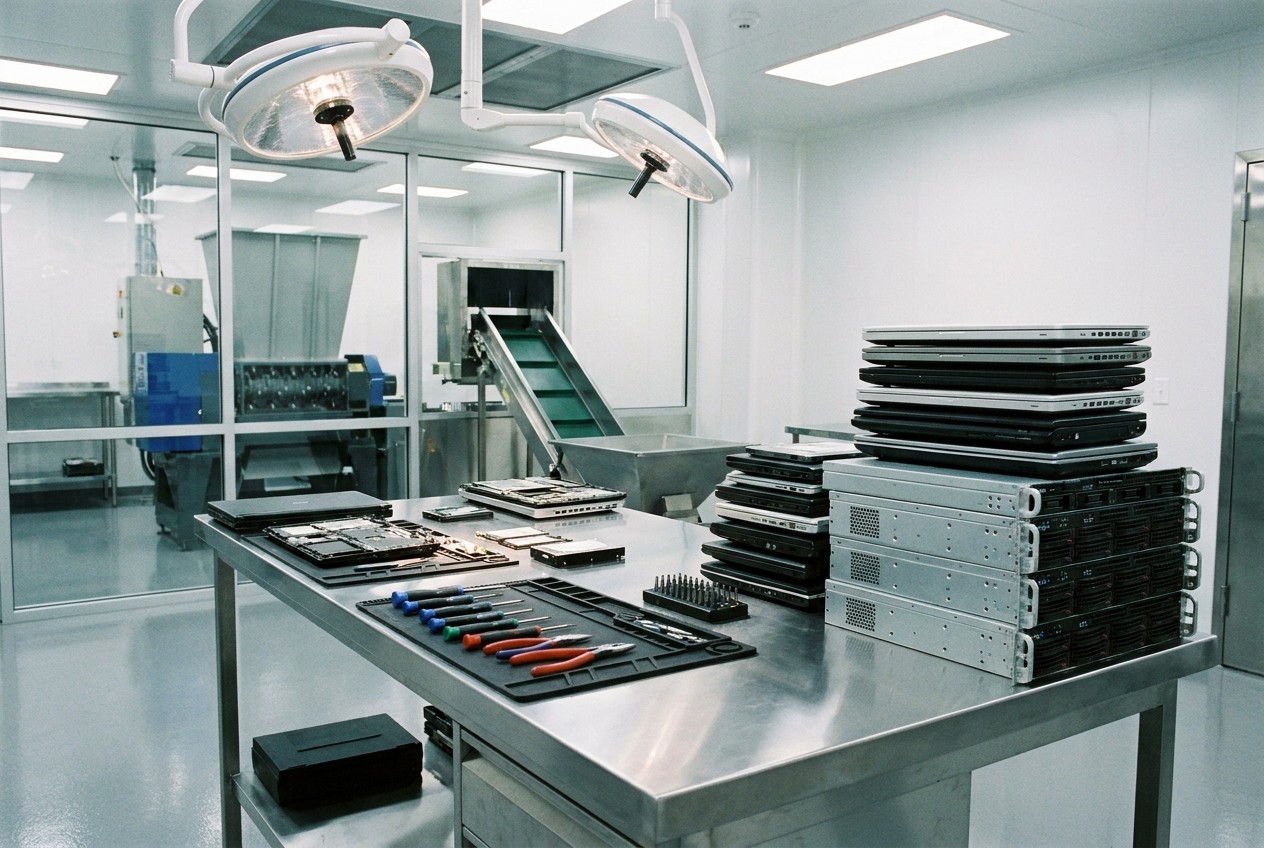
Most business buyers do not need a lecture about sustainability. They need hardware that works, pricing that makes sense, and a supplier that will not turn a procurement shortcut into an operational problem. The good news is that those goals can fit together. When pre-owned electronics are inspected, tested, documented, packed carefully, and shipped through a disciplined process, reuse becomes both a cost-control strategy and a responsible sourcing decision.
The stakes are real. The Global E-waste Monitor 2024 reported that the world generated 62 million metric tonnes of e-waste in 2022, while only 22.3% was formally collected and recycled. That gap is one reason business buyers are paying closer attention to reuse, refurbishment, and responsible end-of-life channels instead of treating every refresh cycle as a one-way trip to disposal.
Reuse Comes Before Recycling
Recycling has an important place, especially for failed, obsolete, or unsafe devices. But reuse is usually the higher-value outcome when equipment still has service life left. A workstation GPU, server memory kit, business desktop, storage controller, or laptop dock may no longer fit one company's refresh plan while still being useful to another buyer with different workload, budget, or compatibility needs.
The U.S. EPA notes that electronics donation and recycling help conserve resources and natural materials, and that electronics contain valuable metals, plastics, and glass that require energy to mine and manufacture. For business hardware, the practical takeaway is simple: do not recycle working equipment too early. Test it, grade it, protect data, and match it to the right buyer.
What Business Buyers Should Look For
Not every pre-owned hardware supplier operates the same way. The difference between a useful refurbished component and a risky one is usually process, not luck. Before buying pre-owned electronics at scale, ask how the supplier handles intake, testing, packaging, and post-sale support.
- Documented testing: Components should be powered, verified, and stress-tested when appropriate, not only visually inspected.
- Clear grading: Buyers should know whether a unit is new, open-box, refurbished, tested pre-owned, cosmetically marked, or parts-only.
- Accurate compatibility: Enterprise buyers need model numbers, capacities, firmware notes, port details, and generation information before purchase.
- Careful packaging: Static-sensitive electronics need anti-static handling, padding, and box selection that matches the item's weight and fragility.
- Responsive sourcing: For multi-unit orders, the supplier should be able to explain availability, lead time, substitutions, and shipping options.
This is where TBR Trade Group's electronics sourcing and tested hardware supply model fits naturally. Buyers are not just looking for pre-owned electronics. They are looking for equipment that has been handled like business infrastructure.
Data Security Cannot Be an Afterthought
Reuse should never create a data risk. Storage devices, systems with embedded storage, and retired business computers need appropriate sanitization decisions before resale, redeployment, recycling, or disposal. NIST describes media sanitization as a process that makes access to target data infeasible for a given level of effort and frames it as a practical decision based on the confidentiality of the information involved.
For buyers, that means two things. First, do not assume every secondhand device has been handled correctly before it reached the market. Second, build a policy for what your own organization does before equipment leaves your control. Delete-and-hope is not a business process.
Energy Efficiency Still Matters
Pre-owned hardware can be a strong value, but the lowest purchase price is not always the lowest operating cost. ENERGY STAR notes that certified computers use about 30% to 40% less energy than standard models by using efficient components and better idle power management. When sourcing desktops, laptops, workstations, and related business electronics, buyers should weigh purchase savings against power draw, expected workload, and remaining useful life.
That does not mean every business needs brand-new devices. It means the right pre-owned unit should fit the job. A tested workstation or component that meets the workload with reasonable power use is often a better decision than overbuying new equipment or keeping unreliable legacy hardware alive past its practical limit.
A Practical Reuse Checklist
- Confirm the exact model, generation, capacity, and condition grade.
- Ask what testing was performed and whether results are documented.
- Confirm warranty terms, return timing, and support contact.
- Verify packaging standards for static-sensitive or high-value components.
- Separate storage-bearing devices from non-storage components in your data-security workflow.
- Plan for responsible recycling when equipment is no longer reusable.
Why This Matters for TBR Trade Buyers
TBR Trade Group works with buyers who need reliable electronics without unnecessary delay or inflated procurement cost. That includes new and pre-owned electronics, tested computer components, GPU and workstation hardware, business electronics, and worldwide supply requests. The sustainability angle is built into the idea that useful electronics should be tested, matched to real demand, packed correctly, and kept in productive service whenever possible.
If your team is sourcing tested pre-owned electronics, planning a workstation refresh, looking for affordable business hardware, or trying to keep reusable computer components out of the waste stream, contact TBR Trade Group. We can help identify practical options, confirm availability, and ship hardware with the care business buyers expect.
FAQ
Is pre-owned business electronics sourcing only about saving money?
No. Cost matters, but the better goal is value: tested hardware, known condition, responsible handling, and a supplier who can support the order after it ships.
What is the difference between reuse and recycling?
Reuse keeps working equipment or components in service. Recycling recovers materials from equipment that is no longer suitable for use. Both matter, but reuse generally preserves more of the original product value when the item is still reliable.
Can refurbished computer components be reliable for business use?
Yes, when the components are properly inspected, tested, graded, and matched to the workload. The supplier's process is the deciding factor.
What should companies do before selling or recycling old computers?
They should follow an appropriate data sanitization process for any storage-bearing device, remove batteries when required, and use responsible reuse or recycling channels.
Source Notes
- U.S. EPA, Electronics Donation and Recycling.
- UNITAR / ITU, The Global E-waste Monitor 2024.
- NIST CSRC, Guidelines for Media Sanitization, SP 800-88 Rev. 1.
- ENERGY STAR, Computers buying guidance and efficiency information.