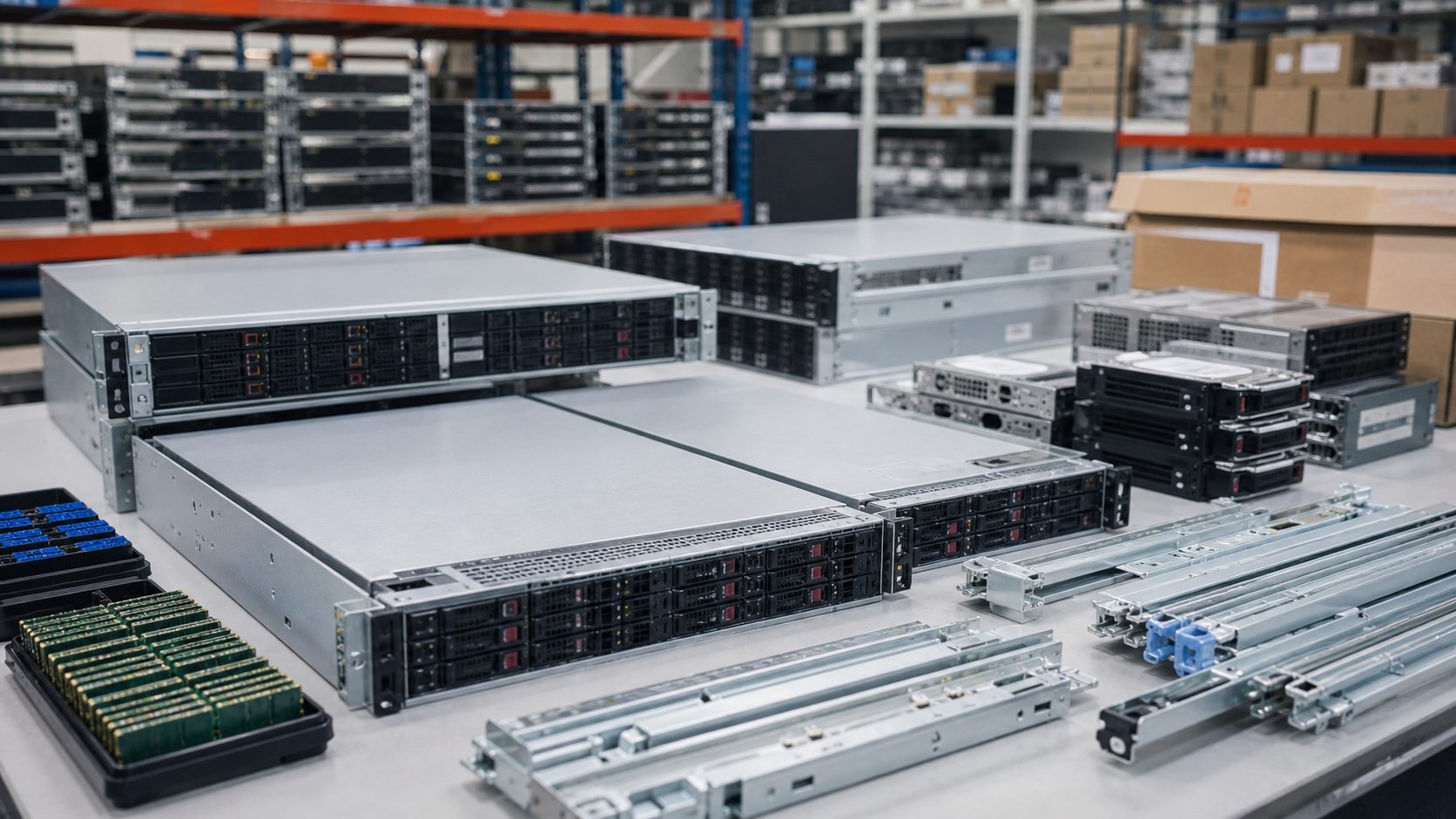
Most server hardware mistakes happen before the quote is requested. The buyer knows a system needs more capacity, but the request is missing model numbers, generation details, drive tray requirements, memory type, power constraints, or firmware considerations.
Start With the Current Platform
Document server model, CPU generation, memory type, storage backplane, drive format, controller, rails, and power supply details. A clear baseline helps avoid parts that look correct online but do not fit the actual chassis.
Separate Upgrade Needs From Replacement Needs
- Capacity upgrades usually involve memory, storage, or CPU improvements.
- Repair stock may need power supplies, trays, fans, controllers, and matching drives.
- Refresh projects may need consistent quantities for repeatable deployment.
Plan Around Lead Time
Server components can move quickly in the secondary market. If a project has a deadline, ask for practical alternatives early instead of waiting until the exact part number is unavailable.
Procurement Notes
For refresh projects, group requests by platform family instead of mixing every possible part into one quote. That makes it easier to confirm compatibility and identify whether a substitute part is acceptable. If uptime matters, separate urgent replacement stock from planned upgrade inventory so shipping priorities are clear.
Buyers should also record whether the hardware is going into production, a lab, a staging environment, or resale inventory. A production replacement may require stricter matching, while a lab or development environment may allow more flexibility around generation, storage format, or cosmetic condition.
Common Mistakes to Avoid
- Requesting memory without confirming generation, rank, and speed requirements.
- Buying drive trays or rails without matching the exact chassis family.
- Ignoring power supply requirements when adding higher-performance components.
- Waiting until a failure happens before sourcing spare parts for aging platforms.
For direct sourcing support, see our server and data center hardware supplier page.